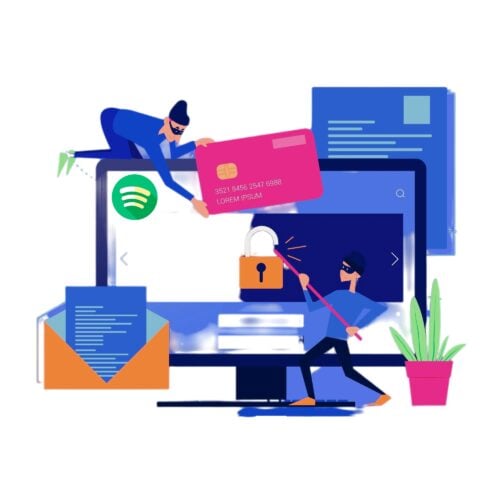
Spotify Phishing Scam Warning
Beware of Cyber Threats from Fake Spotify Emails: What to Look Out For and How to Protect Yourself
With over 600 million users worldwide, Spotify is one of the most popular music streaming platforms. Unfortunately, its vast user base makes it a prime target for cybercriminals. One common tactic used by attackers is phishing emails that appear to come from Spotify, designed to trick users into giving up their personal information, login credentials, or even financial details.
In recent weeks there has been a surge in phishing scams involving Spotify. The two most common email subjects are “Important! We noticed unusual activity in your Spotify account” and “Your Premium payment failed”. Both emails are crafted to lure the user into clicking a link within the email.
Typical Spotify Email Scams
Cybercriminals send out fake Spotify emails to deceive users into taking harmful actions. These emails often mimic official Spotify communication and can take various forms:
- Account Suspension Warning
You might receive an email claiming that your Spotify account will be suspended or deleted unless you “confirm” your details or make a payment. These emails may look urgent, using language like “Act Now” to pressure you into clicking a malicious link.
- Upgrade Offers or Discounts
Phishers may tempt you with an exclusive offer to upgrade to Spotify Premium at a discounted price. The links in these emails may take you to a fake website designed to steal your login information or credit card details.
- Security Alerts
These emails claim that there has been suspicious activity on your Spotify account and prompt you to log in immediately to secure your account. The email might contain a link to a fraudulent website that collects your credentials.
- Refund or Payment Issues
You may receive an email saying that there’s a problem with your payment method or that you’re eligible for a refund. The email often includes a link to “fix” the issue, which redirects you to a phishing site.
Red Flags to Look For in Fake Spotify Emails
Here are some warning signs that can help you spot fake Spotify emails:
- Suspicious Sender Address
Always check the email address that the message is coming from. Official Spotify emails will typically come from “@spotify.com.” Scammers, however, will use slight variations, like “@spotifysupport.com” or “@spotifyalert.com.”
- Spelling and Grammar Mistakes
Official Spotify emails are professionally written. If you notice awkward language, poor grammar, or typos, that’s a major red flag.
- Urgent or Threatening Language
Cybercriminals often use scare tactics, like saying your account will be disabled or compromised unless you act immediately. Spotify rarely uses this kind of language in their communications.
- Unfamiliar Links
Hover over any links in the email (without clicking) to see where they lead. If the URL doesn’t go to Spotify’s official site (spotify.com), don’t click it.
- Unsolicited Attachments
Spotify does not typically send attachments in their emails. If you receive an email with an attachment, especially one you didn’t expect, avoid opening it. It could contain malware or ransomware.
Email Filtering
Cyber threats, including phishing emails, are an ongoing concern for not just Spotify users, but for all online subscription accounts. By being aware of the common types of fake emails and recognising the red flags, you can protect yourself from falling into the traps set by cybercriminals. Always verify the source, use strong security measures like MFA (2FA), and report any suspicious activity. Staying vigilant is key to keeping your personal information safe.
Reach out to discuss an email filtering solution that scans your emails for scams prior to reaching your inbox.
Stay safe and enjoy your music!